Wednesday, March 30, 2005

How I Finished the 2-Bars


If you've been anxiously awaiting to see how I flushed out the initial 2-bars of melody in my prevous blog post, here it is!

Sunday, March 27, 2005

The Thing I Like Most About New Age Piano...


I remember the first time I heard Grofe's Grand Canyon Suite. The whole idea of someone memoralizing a visual scene into music excited me. Even the names of the pieces; Sunrise, Painted Desert, On the Trail... gave me pleasure.

Upon first listening I was hooked. The notion that this composer gave life to nature's beauty was a first of it's kind back then. It was called "Program Music." It's purpose was to allow the listener to imagine the scenes while the composition spun its course.

When New Age music came to the fore in the mid 1980's, I felt the same excitement as I did upon listening to Grand Canyon Suite. Now we had someone who was creating CDs like "Winter into Spring" and "December." Using only the piano, George Winston revitalized the genre known as "program music." And of course, I added my own efforts too.

Monday, March 21, 2005

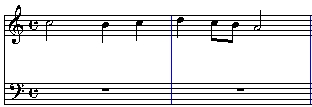
How Would You Finish These 2-Bars?


On my many journeys to the San Diego library looking for books to help me learn composition, I stumbled upon a piano improvisation book. I forget the title, but at the back of the book, there were exercises that prompted the pianist to complete 8 or 16 bars of music with only the first 2-bars filled in.

I found this to be very interesting and one of my first introductions to the power of limits. With only the first 2-bars filled out, it was easy to complete the rest of the melodic phrase.

What's really unique about this little exercise is that many will try to censor what comes out of them and go back to change notes that they already have put down. My next post will show you how I finished the top part (melody) using 8-bars.

Friday, March 18, 2005

House Concerts - A Perfect Venue for New Age Piano!

They used to call them parlor concerts in Beethoven's day.

Now we have something called house concerts. This self-explanatory term is a god-send for New Age pianists. What could be more perfect for this style of playing then someones living room?

I first came upon this idea while trying to find venues to perform "La Jolla Suite" in. It's a good idea if you know someone who has a decent piano. More information on House Concerts..

P.S. I'm thinking about putting together a house concert list for New Age piano. If anyone knows of any potential venues, i.e, someone willing to share their living room and piano for a concert, please email me and let me know. I'll post the list on this blog and my website.

Wednesday, March 16, 2005

Rural Folk Piano? What's That?

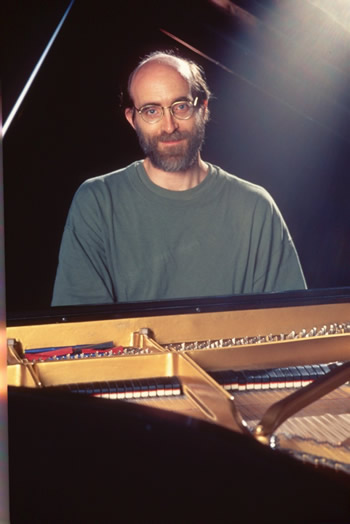
George Winston

Dont get me wrong. I love George Winston's music.

But when he refers to his early piano works as "Rural Folk Piano," it really bothers me.

Whether we like it or not, we're stuck with the term "New Age Music." And even though George has made a good hearted attempt to reposition this music, it's failed.

Instead, I wish he would publicize New Age music instead of shunning it. If he's embarassed of the term, then what's the rest of the world to think?

Monday, March 14, 2005

Is Process Art - Art?

Defining what an original act of creation is can be hazardous.

For example, my definition of what art is - something new that has not existed before where the product (whatever it is) can be enjoyed, admired, judged, criticized etc. by others.

In order for art to exist, there has to be someone or some group of people who can experience it - otherwise, what we would have would exist in a vacuum. Art must be viewed. heard, tasted, and felt.

Which leads me to the title of this blog entry - Is process art (art without thought of the outcome; not preplanned) art art? My answer is yes, if it meets the criteria defined above. If not, it's like any other creation that sits around without being experienced.

What do you think?

Wednesday, March 09, 2005

How to Find Musical Ideas

The Russian Composer Igor Stravinsky once said: " A good composer does not imitate; he steals."

I think what he meant by this is that it's OK to use a technique developed by another and make it your own. To imitate is to steal a technique or style and, somehow, not incorporate your own voice and energy into it.

We all get our ideas from somewhere, whether by accidentally listening to a piece of music and subconsciously storing it away, or by a conscious act where we say to ourselves: "This sounds great and I want to use it in my own music."

Some people have the idea that everything created must be original and by that they mean that there must be no outside influences - but this is unrealistic. Haydn taught Beethoven. Italian composers influenced Bach and so on. All past and present composers on this planet have their influences whether they admit them or not.

Now, most of you know that I have two major influences: George Winston and John Herberman. You may or may not know of these people. The point is I admit that they shaped my own style. How? Because I liked listening to them. It's that simple.

When I sit down to play, I inevitably gravitate towards one style or the other. I'm fine with that. It doesn't mean that I'm unoriginal. It just means that I acknowledge reality and don't try to come up with "something original." What sounds new is 99.9 times out of 100, a modification of what came before.

The whole point I'm trying to make is this: Don't try to be original. Instead, focus on what you like and love and your own voice will come through in the end. The music may be modified to an extreme (innovation) or just a little (homage). Just don't imitate.

Monday, March 07, 2005

Composing for New Age Piano


The first time I heard George Winston play back in the early 1980's I was blown away.

I didn't know why I liked this music. All I knew was that it made me feel good and that was enough. I didn't even play piano back then but something about this music seeped into me almost haunting me. The way he let the notes ring out and wasn't concerned with pop flavorings. A new sound for the time.

When I began to play piano, I wanted to know how he did it. How did he create this music? I read somewhere that his method was to create the chords first, then improvise a melody over them. Great, but what chords and how do you know where and when to play them?

I then realized that George wasn't really doing anything radically different than most classical composers who think in sections. Composing is all about using the techniques of repetition and contrast. Now in most of Winston's music, there is a lot of repetition going on with the contrast coming from the melody. The chords are repeated in certain patterns, the melody played on top, but there still is a framework operating here.

For example, if we take 8 measures of music and call it a (A) section, we have composed. We have taken chords, put them into some kind of order (no matter how tightly or loosely) and have composed. It takes a certain skill to keep the music fresh after a certain number of repetitions. This skill has to be practiced. It can not be taught. This is a doing operation. You can listen to music, but to learn improvisation and composition, you must do it.

Now the secret is this: You may repeat a section as many times as your interest remains with the music. As soon as you become bored in your improvising, so will the listener. For most, having one section isn't enough therefore we bring in the (B) section. This could be anything from 4 to 8 bars of new material. This new material is also repeated and eventually we return to the (A) section. When you start to think in sections, you can unlock the mystery of most music.
Sunday, March 06, 2005

What Inspires You?

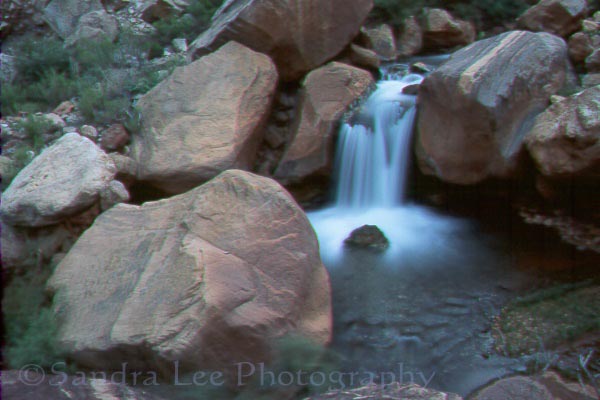
When you sit down at the piano to play, what do you think about? Is it a picture of a loved one, a special time and place, or perhaps it's a walk in the woods you've taken that still lingers. I have a book full of nature photos that just sits at the piano.

When I sit down to play I might glance at a picture and that's all I need to get going. Something about losing yourself in the beauty of nature, even if it's just a picture, gets me going. One of the secrets to improvising is to get into that right brain mode. It's almost like a trance. Then you don't play the music but the music plays you and it all comes out wonderfully well!

Thursday, March 03, 2005

A Group for New Age Piano Enthusiasts


I've created a new group where people who like New Age piano music and like to play in this style can get together and chat. Click here to visit and join this group. It's free!

Digital Vs. Acoustic

I own a nice Roland digital piano. It sounds great and works great. There's only one problem...

I miss the authenticity of an acoustic instrument.

The overtones, the color, the live feel only an acoustic can give. Having played on both excellent and very poor acoustic pianos, I would choose my digital over a poor acoustic - but give me a decent grand or baby grand anyday!

What do you think?