Recently, I've been listening to George Winston. Specifically the piece Colors/Dance. I remember listening to this piece over and over trying to figure out the form of the music. You see, what George does is a very freeing thing for the performer/improviser.
Instead of focusing on the melody, he creates textural sections. For example the opening of Colors/Dance begins with an ostinato (the A section).
This continues for a while until a new, completely different background is created, and then another. So the form or arrangement of the piece may look something like - ABCBA. And it's all done with chords as the backdrop, not melody. A great way to compose. Not as easy as working with melody for some, but an excellent way to capture a mood!
Monday, May 30, 2005

Right-Hand Techniques for New Age Piano
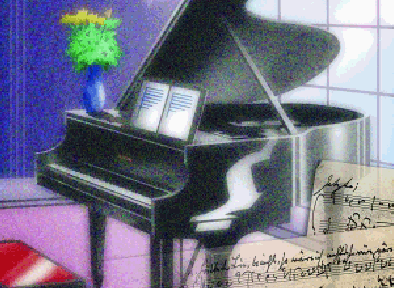
Recently, I had a student ask me to offer some techniques for using the right hand. Usually, it's the left hand that causes the most difficulty but I had to think about it because up till then, I really did not have any "techniques" for the right hand.
I thought about it and tried to think about what I do as far as improvising with the right hand goes. Basically there are really only a few things you can do. You can: Read more...
Sunday, May 29, 2005
Form - Giving Shape to Your Music
Do you ramble on endlessly with your improvisations? If so, good. This has its place in music making and in new age piano playing in particular. Just listen to Michael Jones's music to hear an example of this kind of free-form improvisation.
Now, some of you want to create something that will give the listener a slightly more cohesive experience. Read the rest of this article.
Now, some of you want to create something that will give the listener a slightly more cohesive experience. Read the rest of this article.
How to Create Interesting Textures
A lot of new age piano music consists of repeating patterns, or textures in the left hand while the right hand improvises a melody. This approach is really a good one! It frees you up to create in the moment. First you decide what chord or chords you'll be using in the left hand. You then create an ostinato or arpeggio that lays the foundation for the entire piece. Click here to read more...
Sunday, May 22, 2005
Private Lessons with Edward Weiss
If you live in or around the San Diego County area and would like to take private lessons with me, I'd be happy to accommodate!
I have a busy schedule but I'm sure I can find the time to fit you in. Click here for more information!
I have a busy schedule but I'm sure I can find the time to fit you in. Click here for more information!
Friday, May 20, 2005
My Greatest Influence!
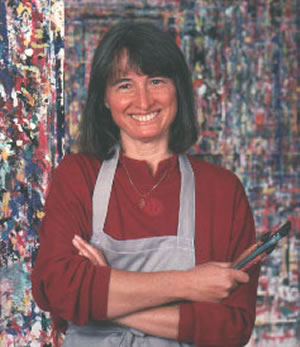
Michele Cassou is author of the book "Life, Paint, and Passion" among other books. I stumbled upon this unique collection of essays on creativity by mistake one day while I was at a Borders store here in San Diego. At the time, I was trying to understand and overcome blocks to my own creativity.
Reading this book was like a breath of fresh air! Everything she said resonated with me and it gave me permission to let go and let the music tell me where it wants to go. A complete reversal in what I was caught up in (ego gratification). As soon as I learned that I was more important than any piece of music I could create, the burden to be the creator of music left and the joy of being a co-creator took its place. A radical, and I believe, necessary shift in attitude if one wants to enjoy music to its fullest. Find her website here.
Thursday, May 19, 2005
Coming Up On 50 Lessons!
Quiescence Music's lesson library is one lesson shy from 50 lessons! That's a lot of material. And there's no sign of stopping! There's so much to learn about improvisation and composition, that, theoretically, I could give lessons forever! But I'm happy to give them once every 2-weeks. Thank you to all my students and friends!
Friday, May 13, 2005
Quiescence Music's Piano Lessons Featured on Google News
More and more people are learning about my New Age piano lesson site. Google just picked up my news release. Here it is.
Thursday, May 12, 2005
Performing Your Music for Others
Thanks to Margaret R. for this excellent post about performing for others. I've been playing for a very long time and this article may be the best information I've ever read about this subject.
Here it is:
I have played in front of an audience of one to thousands (downtownMinneapolis Convention Center).
A few things:
Here it is:
I have played in front of an audience of one to thousands (downtownMinneapolis Convention Center).
A few things:
- Practice, practice, practice joyfully. I find that practicingslowly and meditatively can renew the creative spark of the piece.It also relaxes you when you play so during a performance in frontof an audience your body's muscle memory will be relaxed.
- Play in front of an audience as often as possible. Start with asmall group such as your friends.
The rest of this article is available on The New Age Pianist!
Wednesday, May 11, 2005
Piano Teachers - What's Wrong with Them?
Most of us like to use what we learn right away.
So why is it that most piano teachers tell you you can't really play music until you learn 2 years of theory or more? What hogwash!
If I had to wait that long before I could launch into my own creations I would go nuts. Read more...
So why is it that most piano teachers tell you you can't really play music until you learn 2 years of theory or more? What hogwash!
If I had to wait that long before I could launch into my own creations I would go nuts. Read more...
Monday, May 09, 2005
Haiku and Music
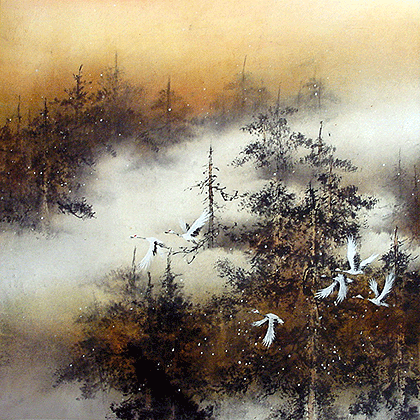
Returning home
and yet more things
are familiar
by Edward Weiss
Can you tell that I really like Japanese art and poetry? Being a Westerner, you'd think this aesthetic would be foreign to me, yet it isn't. It seems very close to how I think and feel about things. Simple, yet elegant, isn't what most in the U.S. think of when referring to art but I have to give it up to Asian culture - they have something very special going on!
Here's some music to go along with the above picture and Haiku. It's called "Egrets." (Mp3 file - 1.18 MB)

Sunday, May 08, 2005
How to Play Piano Using a Few Chords
How many chords do you need to create a piece of music? Would you believe that it doesn't really matter and that whole pieces of music have been created using just one chord? For example, if you play a D minor 7 chord, you could use the bass note D to create a drone effect and anchor the whole improvisation. It could last for a few seconds or many minutes... Read more!
Saturday, May 07, 2005
An Interesting Approach to Teaching Music
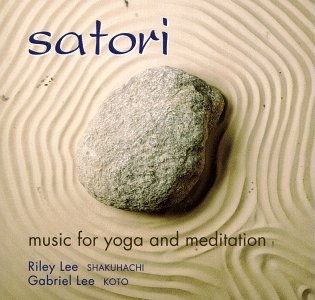
A long time ago, I purchased a CD titled "Satori" by Riley Lee. It's Japanese Shakuhachi flute music with Koto. As soon as I heard this music, I knew I had to get it.
After looking at Mr. Lee's website, I noticed he had an interesting way of teaching music. Find the full article here.
Wednesday, May 04, 2005
Breathing Space in Music
While most students want to know when to play certain notes and chords, it's equally important to know when not to play. For example, I had a student who knew how to improvise and play in the New Age style. What he didn't know how to do was to allow for breathing space. I tried to teach him that... Read more
Tuesday, May 03, 2005
A Quick and Easy Composition Method
Here's the method I use every time I want to capture an idea. I draw out 8-bars (or measures) first. Why 8 bars? Because it is an ideal framework to work in. Eight bars of music are enough to generate a complete musical sentence and can usually be repeated once or twice. Next, I improvise and see what comes up. THEN I will write down the chords I am playing and the first 2-bars of melody. Read more...
Subscribe to:
Posts (Atom)