Monday, October 31, 2005

Finding Your Own Unique Style


Certain people have influenced my own piano playing. One of them is George Winston - probably one of the best out there.

What I really like about his playing is his ability to create atmospheres from very little means. I mean, the man can take a D minor 7 chord and generate interesting music from it for over 5 minutes straight!

A pretty impressive thing! I listened to his stuff for quite a long time. Not because I wanted to learn it, but because I liked it. Big difference there.

Then, when I began to create my own stuff, his influence was there. Again, not because I consciously wanted it to be but because his sound seeped into me over time. This is the way it is for all music. No musician is an island unto him or herself. Everyone is influenced by others.

Another pianist/composer that has influenced my own playing is John Herberman. He plays for the Solitude's label. His music is very quiet and gentle yet profoundly moving. So, again, because of my love for this music, I incorporated into my own sound. Not because of conscious choice, but because it became a part of me.

The point, is this: Listen to whom you like and when it comes time for you to make your own music, your own unique voice will come through. I promise you. You really can't steal someone else's sound, unless of course you wanted to sound like a copycat. If that is your goal, by all means. However, if your goal is to find a style that is uniquely yours, I suggest this one thing - improvise and keep playing.

Using Phrases to Create With

Writers have words, sentences, and paragraphs. Artists have color and canvas. We musicians and composers have what is known as the phrase. A phrase is a way of measuring time and is used by composers to chart their ideas.

We chart out our ideas using phrases and we build a composition by adding more phrases. This is all that is meant by musical form. We use the principles of repetition and contrast to create our music with. This can be quickly accomplished by using the 8-bar phrase.

Friday, October 28, 2005

Taking the Mystery Out of Improvisation


A student recently asked me; "Why is improvisation so mysterious." My response was that there is nothing mysterious about it at all.

Of course, I'm saying this because I have years of experience under my belt, but truthfully, once you understand that all you need to improvise is chords, the mystery disappears and satisfaction takes it place.

Most of the problems students have with improvising is their fear of trying it. They think they need to know college theory or advanced harmony first in order to begin creating in the moment. Nothing could be further from the truth!

For instance, in the piano lesson "Oriental Sunrise," you get the chords down in your left hand. Then you use the pentatonic minor scale to improvise a melody and that's that! Nothing hard about it. No mystery here - just fun!

Trying Blocks the Creative Flow

Many of us try so hard to make music. What most don't realize is that trying hard won't make you a better musician. If your attitude is one of trying to come up with something, you will fail because you will never be satisfied and you will always be wanting more.

Students often wonder why their best efforts aren't good enough. I tell them that their best music will come when they aren't concerned with the outcome. This stops most dead in their tracks.

After all, aren't we supposed to be interested in what the final product will be? Yes, if you want your music to be dead and lifeless. And no, if you desire a music that is infused with that something special - the X factor that is missing from so many creations.

If you let go and let the music tell you where it wants to go, you'll find a satisfaction that is beyond compare!

Thursday, October 27, 2005

New Age Piano - Combining Nature and Music


I think the thing I love most about New Age piano is that it combines my two favorite things - nature and music.

This genre offers the listener a window into the beauty and majesty of Nature. Just listen to some of George Winston's music and you'll be transported into that nonverbal realm where we all are inspired.

It also offers the person who wants to play piano a perfect way to jump into improvisation. No sophisticated chords or voicings here. Not because they aren't good, but because they aren't needed. The beginner can delve into self-expression immediately and create their own music using simple means. A few chords, a scale are all that is needed! I find this immensly appealing.

Friday, October 21, 2005

Quiescence Music Nears 60 Lessons Mark!

It's taken quite a while to get here. But we are now almost at the 60 lessons mark. That's a lot of material! In fact, it might take the average student a year or more just to get everything out of what we put into each and every lesson! And the way we structure them, you can always come back and learn more from each lesson.

Our thanks to all our students and friends. Thank you for taking our class and for keeping New Age piano alive!

Edward Weiss

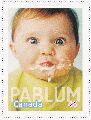
Pablum or Musical Snobbism?


Sometimes, I'll look around the web to see who's saying what about New Age music.

Recently, I visited Google Groups where I read a post arguing that New Age music is pablum, not to be taken seriously. This got me thinking. Was he right? Is New Age music a tasteless mushy genre that doesn't belong in the ranks of serious music?

Of course, the person who posted this must have been a "serious" musician. By serious I mean schooled in Western harmony, theory, etc. But they just don't get it. They don't get that music is music is music and that judging one genre superior over another is folly.

For example, I'm not a big fan of Country music, but I respect the people who love it and leave it at that. I really don't like Rap music, but I recognize that millions of people do so who am I to say it's "not good."

Pablum? Perhaps to some, but to me New Age music and New Age piano in particular happen to be gourmet treats that I can't get enough of!

Tuesday, October 18, 2005

Composing Using Chord Charts - Creating "Egrets"


What is a chord chart you ask? It's just bars of music with chord changes on top. It's an amazing tool you can use to quickly capture musical ideas.

For example, the piece "Egrets" is just an 8-bar phrase repeated twice (after a 2-bar introduction).

This could actually be the (A) section to a more extended version of the same piece; that is, if I wanted to extend the piece.

Listen to "Egrets" (Mp3 file - 1.18 MB)

Look at the chord chart for "Egrets" (PDF file - 15.9 kb)

Monday, October 17, 2005

Have a Piano? Put on a House Concert!

Imagine it. You're living room is full with excitement. You've got a grand or baby grand piano and you or someone else is about to put on a house concert!

The lights are low, candles are lit, and it's a beautiful Autumn evening! If you do have a piano and have enough space for 20 or more people, you can put on a concert right in your own living room. In fact, I'm trying to put together a database of people who would be willing to open their homes to do this. Interested? Send me an email and I'll include your place as a potential venue. Of course, I won't publish private information, but if you are interested is doing something like this we can work together to accomplish it.

P.S. If you have no idea what a house concert is or just want to learn more about it http://www.houseconcerts.org/ is an excellent site filled with lots of useful information.

Sunday, October 16, 2005

Picture Prompts for New Age Piano


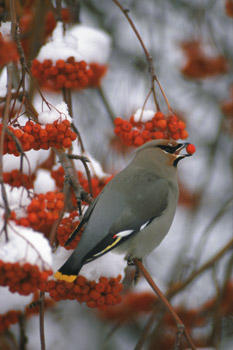
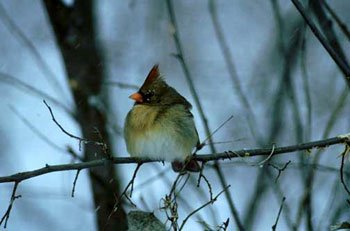
They say a picture is worth a thousand words, or in this case, the beginning of a New Age piano improvisation/composition.

I'm thinking about doing something called "Picture Prompts" where every week or so, I'll post a picture to this weblog and give some sort of assignment. For example, I might use this picture and give you some guidelines like:

Create an improvisation based on this picture. Use the Key of G. Use only 3 chords, G Maj 7, A min. 7, and C Maj. 7. Play for at least 3 minutes.

If this is something you might want, let me know and I'll include it as a regular feature. Or, if you have suggestions of your own, let me know by posting a comment.

Saturday, October 15, 2005

Recommended Reading - The Artist's Way

I first saw this book back in the early 1990's. And like anyone interested in the creative endeavor, I picked it up and browsed through its table of contents.

The book is structured so the reader is an active participant in a 12 step procedure designed to awaken and enhance creativity. No, it's not like Alcoholics Anonymouns and yes, it is a very good read and offers insight into the creative process.

The core of the book is a journal you keep, the purpose of which I assume is to become aware of any critical voices that pop up during the writing process. The book isn't just for writers however and if you're having problems understanding and developing your creative side, it's well worth a read.

P.S. If anyone has read and used the book, feel free to leave your comments.

Friday, October 14, 2005

We're Number One at Yahoo!


I don't toot my own horn too often but I'm pretty proud of the fact that we are now the number one result for the search term "New Age Piano" on Yahoo. But this could change quickly as search results notoriously do. But for now, it's very nice to see! Click here to see a screenshot of our number one ranking.

Thursday, October 13, 2005

Keeping a Composition Journal Pt 2.


Another good thing about keeping a composition journal - weeks, months, and even years after you notate your ideas, they'll remain waiting for you and will seem just as alive as when you first wrote them.

When I was creating the music for Anza-Borrego Desert Suite, some of the pieces were "in progress" and lay waiting for completion. Some lay in wait for weeks while I worked on others. But when I returned to them, I was able to begin right where I left off...thanks to notating the main idea.

You never know when an idea will make itself known. By writing it down, you will be able to return to it whenever you want and when inspiration is fresh!

Sunday, October 09, 2005

Should Music be Used for Something?

I have this great Japanese flute and koto CD I listen to. It's called Satori and I put it on every once in a while, not to relax, but just to be reminded of what music for music's sake sounds like.

There is no planning here. No forethought. It is pure improvisation and frankly, there is nothing that compares with it as far as being in the moment improv is concerned. You can really "feel" the moment here. It's as if time is suspended and there is nothing but the player and the music.

The best thing about this is that you enter the state of mind the musician is in when he recorded the music. You feel, through the music, the feelings and, in this case, the peace the flute player has in his heart as he plays the instrument. It's really quite amazing!

You can see this CD and listen to some of this music at Amazon.

Thursday, October 06, 2005

Keeping a Composition Journal

Visual artists do it. They know that keeping a journal of their ideas is a great way to preserve inspiration.

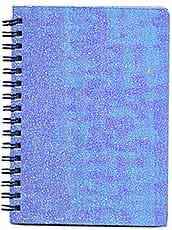
We composers can do it as well. I use a spiral bound notebook. What I do is I just draw out 8-bars first, then pencil in the first 2-bars of melody as a rhythmic pattern. I don't try and determine pitch quality yet. I've found that by putting in the note values themselves, i.e., half-notes, quarter notes, the pitches are very easy to get and almost appear by themselves!

Wednesday, October 05, 2005

Recommended Listening


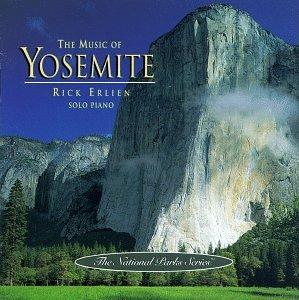
The Music of Yosemite - Rick Erlien Solo Piano


I first saw this CD in a Towers record store here in San Diego. It was the cover art that drew me in. What is it about solo piano music and nature I find so appealing? I think it has to do with the idea that an artist, in this case a pianist/composer, can take musical materials and shape them into something that we can hear and respond to - a work of art. Instead of looking at a photo of Ansel Adams, we can actually listen to this person's interpretation of Yosemite. Fantastic!

Listen to a few sample tracks at Amazon

Saturday, October 01, 2005

New Age Piano Lives!

Yes, it still exists and is being published by Alfred Music Company. Although they don't call it "New Age" per se, it has the sound and look of it. I'll do anything I can to keep this style of music alive because I believe it to be a vibrant art form that can contribute so much!

Click here to see a folio ttled "California Coastline" and for sample sheet music in PDF format.