What I'm about to share with you took me years to learn! And I'm still learning it. What am I talking about? I'm talking about something that will revolutionize your playing. I'm talking about being present at the piano while you're playing!
See. I told you it was simple. Simple to say but not so simple to do.
Let me tell you how I approach this. Some time ago, I sat down at my piano to work on some pieces for a new CD project. I'd completed the first sections on many of these pieces but the rest of the music just wouldn't come.
Click here to read the rest of this article!
Tuesday, May 30, 2006

Monday, May 29, 2006
Chord Progressions for New Age Piano

The sound of New Age music can be divided into the 3 parts melody, harmony, and rhythm. The harmony aspect can be thought of simply as chords. Now New Age music does use certain piano chords more than others.
One chord I'm fond of is the 9th chord. All this means is that the ninth note of the scale is used to create the chord with. For example, a triad built from the C Major scale is spelled - c-e-g. If we add the seventh note in the scale (b) we get a seventh chord - C Major 7. It's spelled - c-e-g-b. Simple enough.
Click here to read more!
Saturday, May 27, 2006
How a "Difficult" Piano Student Actually Showed Me How to Teach Piano
I'll never forget the time I was giving lessons to this one student. Talk about difficult. She just couldn't get it. And the "it" I'm talking about is not reading music or playing Beethoven or Bach. I'm talking about improvisation.
No matter what I showed her she just froze up.
I then realized something. This student really wasn't having problems getting the technical aspects down, i.e., chords. The problem was she didn't think she could do it! It was all attitude. I then had a lightbulb moment.
Click here to read the rest of this article.
No matter what I showed her she just froze up.
I then realized something. This student really wasn't having problems getting the technical aspects down, i.e., chords. The problem was she didn't think she could do it! It was all attitude. I then had a lightbulb moment.
Click here to read the rest of this article.
Thursday, May 25, 2006
Fast Piano Improvisation Secret Gives You Instant Satisfaction on the Keyboard

Have you ever seen someone playing piano without sheet music and wonder "how are they doing that?"
It's like magic to the uninitiated. They think this person must have years and years of training under their belt. And while some pianists do have years of classical training it doesn't mean a thing!
That's right. In fact, having a classical background can actually hinder your ability to just sit down and freely improvise. No, what most improvising pianists know is how to use chords.
Click here to read more!
Wednesday, May 24, 2006
Why Most Piano Teachers Can't Help You
Most piano teachers have no problem teaching technique or note reading from textbooks. This is what they're good at. In fact, this is the bread and butter of their curriculum because they can make a lot more money by stretching out the "learning process" ad Infiniti.
But, most piano teachers have trouble guiding students and helping them learn how to trust themselves. Why? Because they aren't trained in this! They're trained in getting you from A to B and while this linear approach satisfies many... it won't help you with your own artistic expression.
The bottom line is - if all you're interested in is note reading and playing other peoples music, then most any piano teacher will do. If, however, you want to be able to improvise and create your own unique music, then find someone who will help you trust in your own unique talents and abilities.
But, most piano teachers have trouble guiding students and helping them learn how to trust themselves. Why? Because they aren't trained in this! They're trained in getting you from A to B and while this linear approach satisfies many... it won't help you with your own artistic expression.
The bottom line is - if all you're interested in is note reading and playing other peoples music, then most any piano teacher will do. If, however, you want to be able to improvise and create your own unique music, then find someone who will help you trust in your own unique talents and abilities.
Monday, May 22, 2006
Snow on Pines
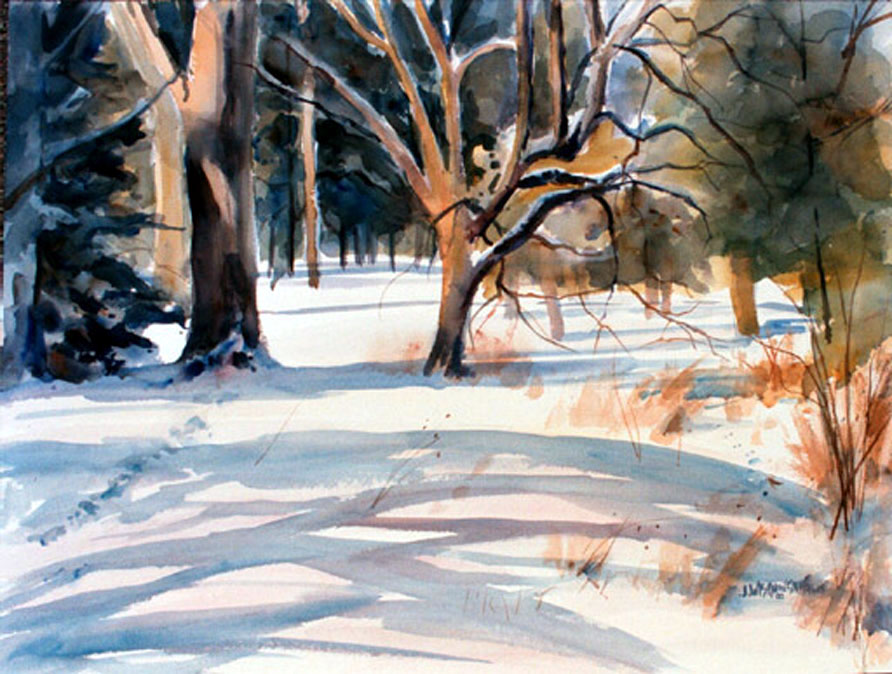
When Winter is here we wish for Summer. When Summer is upon us... well, you get the idea. In this lesson we use chords in the Key of F Major along with a chord chart to create a small ABA form.
The upper register of the piano is really used here to create a nice delicate atmosphere. An aural canvas if you will. Open position chords are used along with a simple melody. We use the principles of repetition and contrast and voila.. a new lesson for you!
Want a step-by-step breakdown of how this piece was created? Take my online piano class!
Listen to Snow on Pines (Mp3 file - 2.14 MB)
Friday, May 19, 2006
My Teaching Philosophy
If you've had a chance to read any of my articles, you'll soon discover that I don't prescribe to the "traditional" way of doing things on the piano. For example, I don't believe it's particularly important to know scales and exercises.
What I do believe to be important is your ability to connect with your source and find the music that is uniquely you. This is why I emphasize improvisation skills so much. Learning how to improvise is the key skill you need to learn to trust in your inner voice and to find your own special way of playing piano.
What I do believe to be important is your ability to connect with your source and find the music that is uniquely you. This is why I emphasize improvisation skills so much. Learning how to improvise is the key skill you need to learn to trust in your inner voice and to find your own special way of playing piano.
Thursday, May 18, 2006
Sharing Your Music With Others
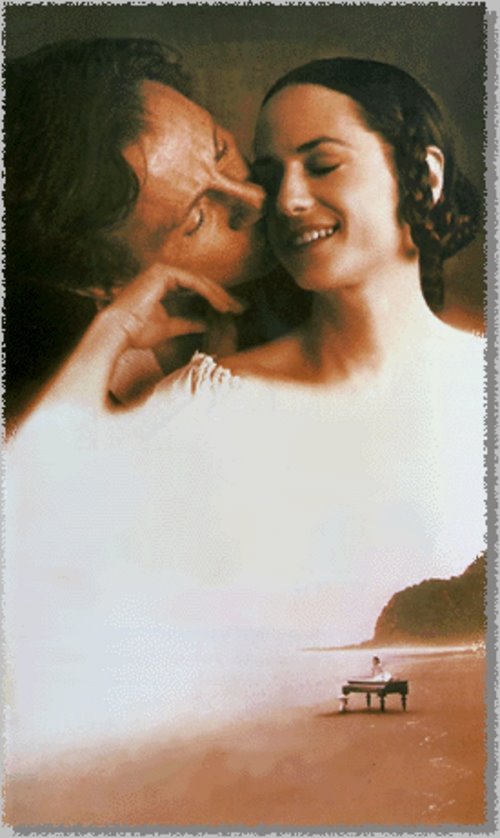
Ok. You don't have to have sex with Harvey Keitel to share your piano compositions with others. Just a few pieces that's all.
Here's a working plan for you.
1. Create 3 Pieces of Music
For those of you who are just beginning to improvise, don't worry about this. But for those who are beginning to compose, you'll need to have 3 complete pieces to play. Why? Because this will come to around 10-15 minutes of music - the perfect amount of time for a mini-concert!
If you're in the process of creating your 3 pieces and haven't finished yet set an goal date. For example, it's a good idea to write something like this down:
Click here to read the rest of this article!
Tuesday, May 16, 2006
Piano Songs - Create Them Yourself!
Have you ever wanted to create your own unique piano songs? Just simple pieces that express how you feel? You can if you learn how to improvise first and then learn how to compose. Here's why.
Improvising allows you to express what you feel without constraint. In essence, it's like freewriting because the goal here is to free your own unique voice without having to worry about right or wrong, good or bad. It is a skill that students should learn before any other and is foundational for further success at composing. Once you are able to sit down at the piano and can trust your intuition to guide you, you're ready to compose.
Click here to read more!
Improvising allows you to express what you feel without constraint. In essence, it's like freewriting because the goal here is to free your own unique voice without having to worry about right or wrong, good or bad. It is a skill that students should learn before any other and is foundational for further success at composing. Once you are able to sit down at the piano and can trust your intuition to guide you, you're ready to compose.
Click here to read more!
Saturday, May 13, 2006
My Piano Playing Secrets
Even my cat doesn't know these secrets. That's why he's crying at the top of his little lungs. But seriously...
I've been playing the piano for over 14 years now and I've learned a few things. Just a few things that help me stay focused on what is important to me when sitting down to play. Following in no particular order are three "secrets" I've discovered:
Secret #1: Only Play What you Love
For those of you who don't know, I play and teach New Age piano. I don't play classical or jazz. Not because I don't like these styles, but because when I sit down at the piano, the New Age style is what is inside of me. Of course, I could play classical and jazz, but I just don't want to and neither should you if that's not the style you're interested in. If you play what you love, technique and growth will naturally follow and you will tend to spend more time at the piano than away from it.
Click here to read more!
Friday, May 12, 2006
Broken Chord Piano Technique
Ah, broken chords. The sound. The cascading pattern of chordal notes. It's beautiful. There's no doubt about it. And this technique is one of the easiest to learn. After all, all you need to do to create it is have a chord under your fingers and be able to "break it up."
What do I mean by break it up? You've probably heard of solid chords. This is when all tones are heard at once. For example, if I finger a C Major triad and play all three keys at once, I'm playing a solid chord. But, if I break this chord up into it's 3 notes and play them one at a time you get a broken chord.
Click here to read the rest of this article!
What do I mean by break it up? You've probably heard of solid chords. This is when all tones are heard at once. For example, if I finger a C Major triad and play all three keys at once, I'm playing a solid chord. But, if I break this chord up into it's 3 notes and play them one at a time you get a broken chord.
Click here to read the rest of this article!
Tuesday, May 09, 2006
Haiku and New Age Piano
You know what New Age piano reminds me of? Haiku! It's beauty relies on saying a lot with very little material. A complete emotional experience in 3 lines. It's a simple art form yet one that is not so simple to master - partially because it takes a while to get used to the AHA moment. Capturing this moment is what Haiku is all about.
For me, music is easier than words, but I'm now a big fan of Haiku and hope to write some of my own in the near future.
For me, music is easier than words, but I'm now a big fan of Haiku and hope to write some of my own in the near future.
Monday, May 08, 2006
Recommended Listening
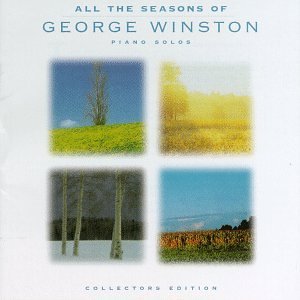
If you're new to "New Age" piano, then I suggest starting with this CD. It's by the man who literally put this genre on the map (even though he hates the term "new age!")
This CD contains Winston's greatest hits so to speak. Some of the songs are shortened and were edited for radio play.
This is the perfect CD to get a taste of what New Age piano is all about. Winston's inspiration comes mainly from the seasons and you can hear it in much of this music. From the plaintive "Colors/Dance" to other more pastoral moods, the music transports you to less complicated times. Highly recommended.
You can listen to tracks and purchase the CD at Amazon.com.
Sunday, May 07, 2006
The Most Important Thing a Piano Teacher Can Give You
I've had a few piano teachers over the years. And I can't say that they really helped me. Why? Because I can learn technique pretty much on my own.
What I needed was for someone to help me TRUST MY OWN INTUITION and act as a mentor guiding me to my desired goal, which at that time, was to create my own music.
Think of a visual artist as an example. This artist may be able to understand and apply different techniques to create a pleasing work of art, but the art itself won't have that special X factor that only comes when an artist fully trusts their own intuition.
Click here to read more!
What I needed was for someone to help me TRUST MY OWN INTUITION and act as a mentor guiding me to my desired goal, which at that time, was to create my own music.
Think of a visual artist as an example. This artist may be able to understand and apply different techniques to create a pleasing work of art, but the art itself won't have that special X factor that only comes when an artist fully trusts their own intuition.
Click here to read more!
Thursday, May 04, 2006
Summer Memory
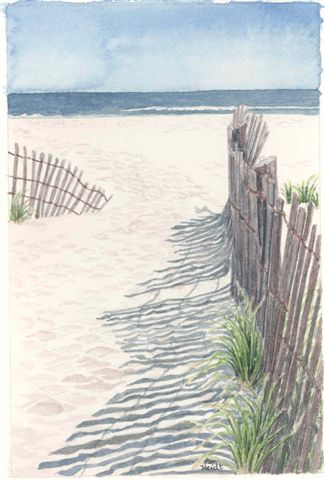
This lesson comes from the book New Age Piano Made Easy. A 4-bar phrase is repeated twice followed by another 4-bar phrase. Then the whole thing gets repeated again and again - an excellent improvisation exercise! Want to know how this piece was created step-by-step? Take my online class!
Listen to Summer Memory (Mp3 file - 2.51 MB)
Wednesday, May 03, 2006
You Can Compose Your Own Music!
Whenever someone uses the word composer, inevitably, the names of Beethoven, Bach, and other classical personages come to mind. This can be very intimidating to those who want to record their musical thoughts and ideas down.
In fact, comparing yourself to ANY composer will be detrimental to you. Why? Because you will always have to live up to someone's expectations of what is good music or what is not good music. This comparison trap will lead you nowhere and will result in a drying up of the creative spirit. The solution to this trap is to begin where you are and for most of us that means begin EASY!
Click here to read the rest of this article!
In fact, comparing yourself to ANY composer will be detrimental to you. Why? Because you will always have to live up to someone's expectations of what is good music or what is not good music. This comparison trap will lead you nowhere and will result in a drying up of the creative spirit. The solution to this trap is to begin where you are and for most of us that means begin EASY!
Click here to read the rest of this article!
Tuesday, May 02, 2006
Piano for the Fun of It

So, you're a fan of the piano. You like the way it looks and sounds but you're too afraid to approach the task of learning how to play it.
You're not alone! Literally millions of people would love to learn this instrument but don't because they're intimidated by the learning curve. But fear no more! Your learning curve just got a lot shorter thanks to the Open Position Chord!
Click here to read more!
Subscribe to:
Posts (Atom)